how to organize your thoughts before speaking
short answer
To organize your thoughts before speaking, do not try to memorize every sentence. Use three recall points instead: open with a quote or anchor, explain the idea with one intentional visual, and end with a simple action step.
watch the video
This article is adapted from my video, How to organize your thoughts when speaking. If you want to hear the examples in context, start there first, then use this page as the skimmable version.
Suggested embed: YouTube video near the top of the page, directly under this section.
resources
If your ideas are strong but they come out scattered, 5-Minute Communication Frameworks gives you plug-and-play structures for making your point quickly.
Want one clear-thinking idea in your inbox each week? Join the Speak with Frameworks newsletter for practical ways to think fast, speak smart, and upgrade your mental OS.
the 10-second version
recall point | what it does | use this when | example |
|---|---|---|---|
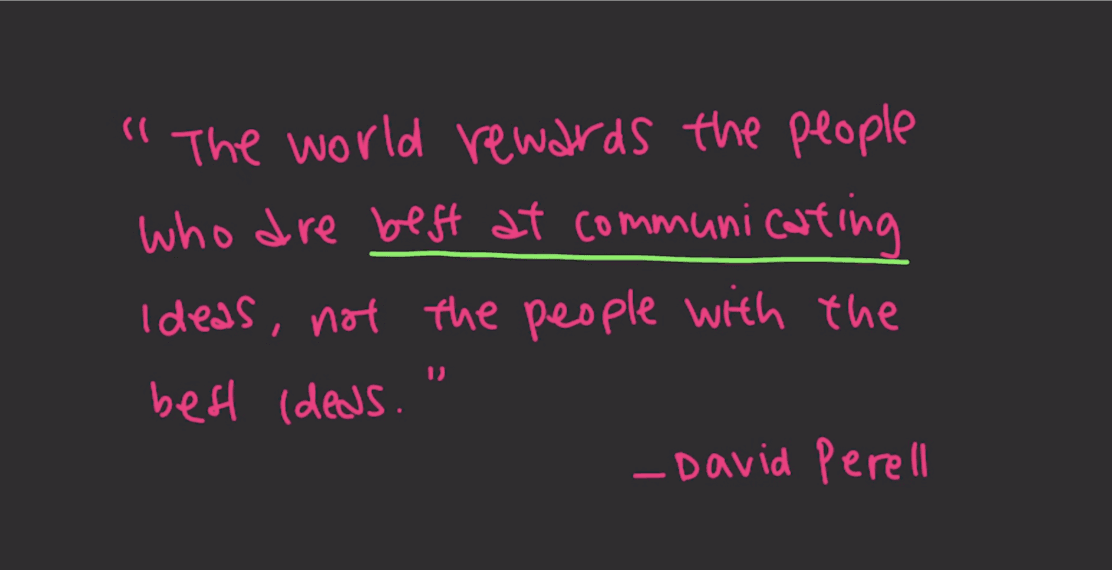
Quote or anchor | Gives you somewhere to start | You are worried you will ramble at the beginning | "The world rewards the people who are best at communicating ideas, not the people with the best ideas." |
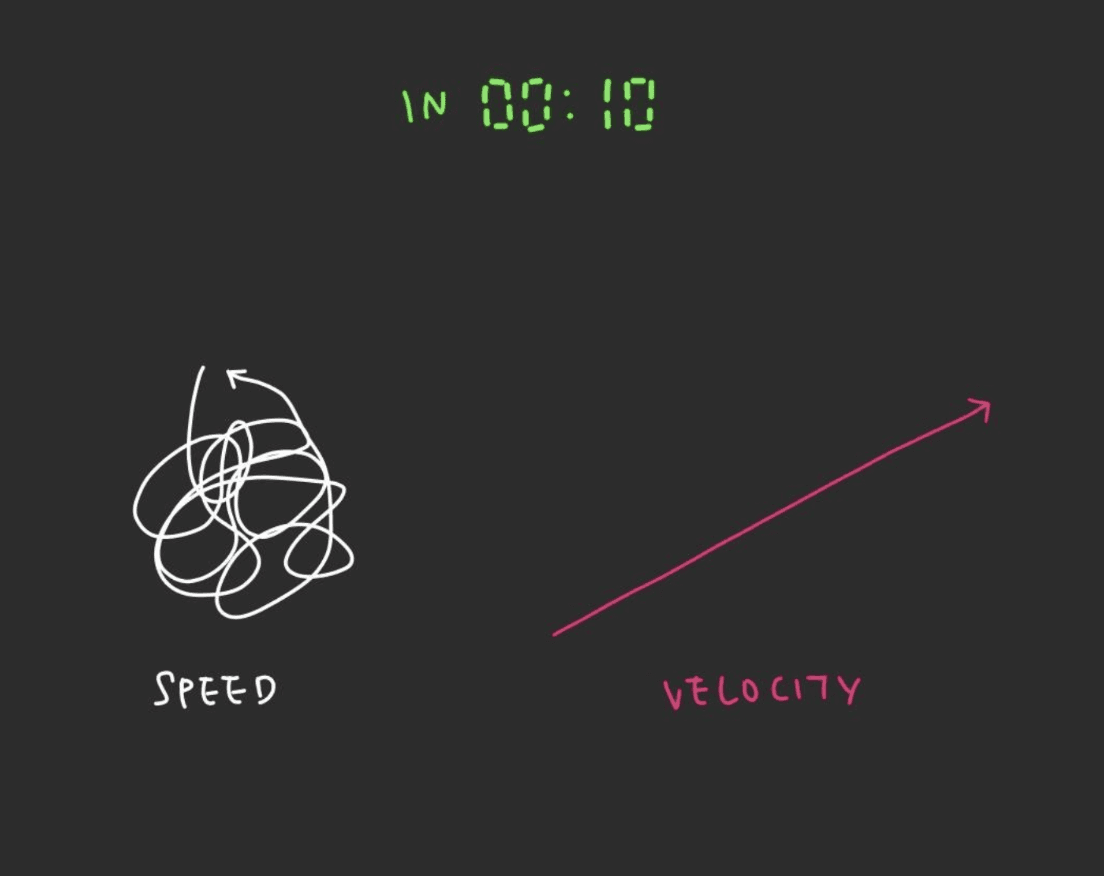
Intentional visual | Makes the middle easier to remember | Your idea involves change, contrast, or a before/after | Speed versus velocity |
Action step | Gives the listener somewhere to go next | You want the idea to create follow-through | "Bring one recommendation to Friday's meeting." |
the real problem
Most people think they need to memorize more to speak clearly.
The real problem is usually the opposite. You are trying to hold too much in your head at once: the point, the wording, the evidence, the order, the examples, the caveats, and the ending.
That is why your mind can go blank. It is not because you do not have ideas. It is because the ideas have no handles.
In the video, I explain it this way: "The world rewards the people who are best at communicating ideas, not the people with the best ideas." Painful, but true.
The real goal is to give your thinking a few strong recall points so you can find your way while you are speaking. Perfectly reciting a script matters less because most speaking moments change once another person enters the conversation.
Use 3 things:
A quote or anchor.
An intentional visual.
A simple action step.
step 1: open with a quote or anchor
The hardest part of speaking is often the first sentence.
This is where people start rambling. They are trying to find the point while already talking, so the first 30 seconds become a warm-up that the listener has to sit through.
A quote fixes this because quotes are "concise, impactful, and get straight to the point." They do 3 jobs:
They help you open and get attention.
They establish credibility by showing the idea already has shape.
They anchor your main point so you are not starting from zero.
You do not need a famous quote every time. The quote can also be your own sharp sentence.
For example:
Clear communication is really about making your ideas easier to follow. What people underestimate is that strong ideas still need a structure other people can enter.
Then bridge into the work context:
"The reason this matters for our team is that our recommendation is strong, but the current explanation buries the decision under too much context."
That one sentence gives you a beginning. It also tells the listener what kind of conversation they are about to enter.
step 2: use one intentional visual
The middle of a message is where structure usually falls apart.
You start adding context, history, caveats, side notes, and supporting evidence. All of it may be true, but the listener cannot tell what matters.
This is where an intentional visual helps.
Not every visual is useful. The best visuals for speaking usually show one of 2 things:
Change.
Contrast.
Change means something moved from one state to another. Contrast means two things look similar, but there is an important difference.
One example from the video is speed versus velocity. Speed tells you how fast something is moving. Velocity tells you speed plus direction.
That is a useful visual because it turns an abstract distinction into something your brain can hold. Are we simply moving fast, or are we moving in the right direction?
Idea | Useful visual contrast |
|---|---|
Speed versus velocity | Moving fast versus moving in the right direction |
Busy versus effective | Doing many tasks versus moving one important outcome |
Rambling versus clear speaking | Streaming thoughts versus guiding the listener |
Recommendation versus data dump | A decision path versus a pile of evidence |
The image does not always need to be on a slide. Sometimes it just needs to live in your mind.
That is enough to help you remember what you are saying. It also gives the listener something easier to process than a pile of words.
step 3: end with a simple action step
A lot of strong ideas die at the end because the action step is too vague or too large.
"We should communicate better as a team" is not an action step.
"We need to rethink the whole strategy" may be true, but it is too big for the listener to do anything with in the moment.
The action step should be simple enough that someone can actually take it.
In the video, I use climate change as an example. If the action step is "vote for the right leaders," the barrier is high. If the action step is "bring your own bag to the grocery store," the barrier is much lower.
That smaller action matters because once someone starts acting in alignment with an idea, it is easier for them to keep acting in alignment with it.
At work, this could sound like:
"For Friday's review, let's each bring one recommendation, one risk, and one decision we need from leadership."
That ending works because it tells people exactly what to do next.
try this in your next meeting
Use this before you speak:
My anchor:
[What is the one sentence or quote that captures the idea?]
My visual:
[What change or contrast makes this easier to understand?]
My action step:
[What is one small thing the listener should do next?]
Here is the same structure in practice:
Anchor:
The campaign worked for awareness, but not conversion.
Visual:
It is a leaky funnel. People entered at the top, but dropped off when the offer required a decision.
Action step:
For the next test, keep the same audience but rewrite the offer around one concrete use case.
The real goal is to give your brain a map. Sounding rehearsed matters less because most workplace speaking is responsive: someone asks a question, adds context, or changes the direction, and you need a structure you can return to.
common mistakes
Starting with background instead of the point.
Trying to memorize full sentences.
Using visuals that decorate the idea instead of clarifying it.
Ending with a vague takeaway.
Giving an action step that is too big for the listener to take.
🧪 why this framework
This framework works because it reduces the mental burden of speaking. Cognitive load theory suggests that people learn and perform better when information is structured in a way that reduces unnecessary processing. Worked examples and explicit structure can make complex tasks easier to learn, especially for novices. See this overview of worked examples and cognitive load.
The visual step is also supported by dual coding and multimedia learning research. Dual coding theory and multimedia learning research suggest that people can understand and remember ideas better when verbal information is connected to visual representation. See this overview of multimedia learning and dual coding.
The practical implication: do not make your brain hold every word. Give it a structure, an image, and a next step.
faq
how do i organize my thoughts before speaking in a meeting?
Use three recall points: one opening anchor, one visual or contrast, and one next step. Before you speak, ask: "What is the one thing they need to know? What image makes it easier to understand? What should happen next?"
what should i do if my mind goes blank?
Return to the structure. Say, "The main point is..." Then explain the visual or contrast. If you still need time, ask a clarifying question before answering.
should i write out what i want to say word for word?
Usually, no. A full script can help with high-stakes presentations, but for meetings and spontaneous speaking, it is better to remember the structure than the exact wording.
how do i stop rambling when explaining an idea?
Start with one sentence that states the point. Then use one visual, contrast, or example. Then end with one action step. Rambling often happens when you try to discover the structure while speaking.
what is the best structure for clear speaking?
For everyday workplace speaking, use anchor, visual, action. The anchor tells people the point, the visual helps them understand it, and the action step tells them what to do next.
if you enjoyed this...
You might also like: How to Think Fast Before You Speak: Framework Thinking
Mental reframe
Actionable frameworks content every week.
Subscribe (it’s free):